Buy d3v.eu ?
We are moving the project
d3v.eu .
Are you interested in purchasing the domain
d3v.eu ?
domain@kv-gmbh.de · 0541-91531010
Buy d3v.eu ?
When are ligands neutrally charged?
Ligands are neutrally charged when they have an equal number of positive and negative charges. This can occur when the ligand has a net charge of zero, such as in the case of water (H2O) or ammonia (NH3). Additionally, ligands can also be neutrally charged when they form coordinate covalent bonds with a metal ion, resulting in a neutral overall charge for the complex. **
What is the toughness of ligands?
The toughness of ligands refers to their ability to form stable coordination complexes with metal ions. Ligands with high toughness have strong bonds with the metal ion, making them less likely to dissociate from the complex. This property is important in determining the stability and reactivity of coordination complexes. Tough ligands are often used in catalysis and other applications where the complex needs to remain intact under harsh conditions. **


Similar search terms for Ligands
Top-Angebote
Products related to Ligands:
-
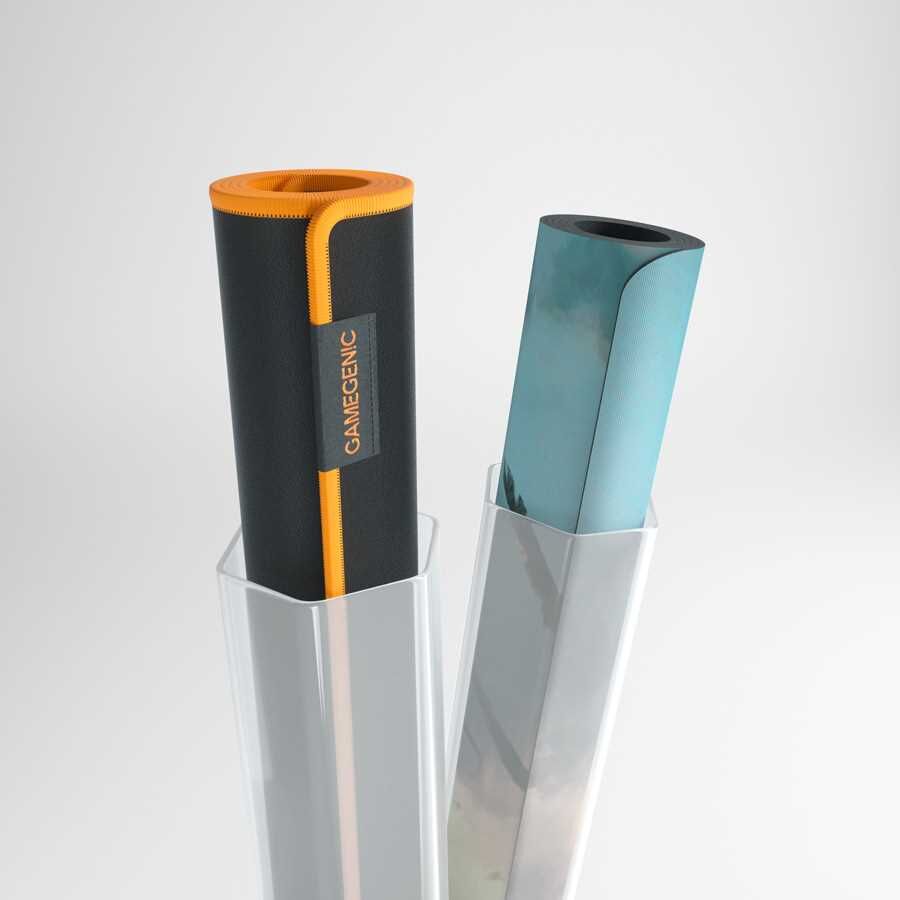
Gamegenic Playmat Tube - Clear - Tabletop Gaming Accessories - Clear - TubeProtect and store your playmat with the Gamegenic Playmat Tube. Clear design prevents scratches and pressure. Hexagonal profile stops rolling. Easy to identify contents without opening.6,59 £*Shipping: 3,95 £Secure redirect to the provider
-
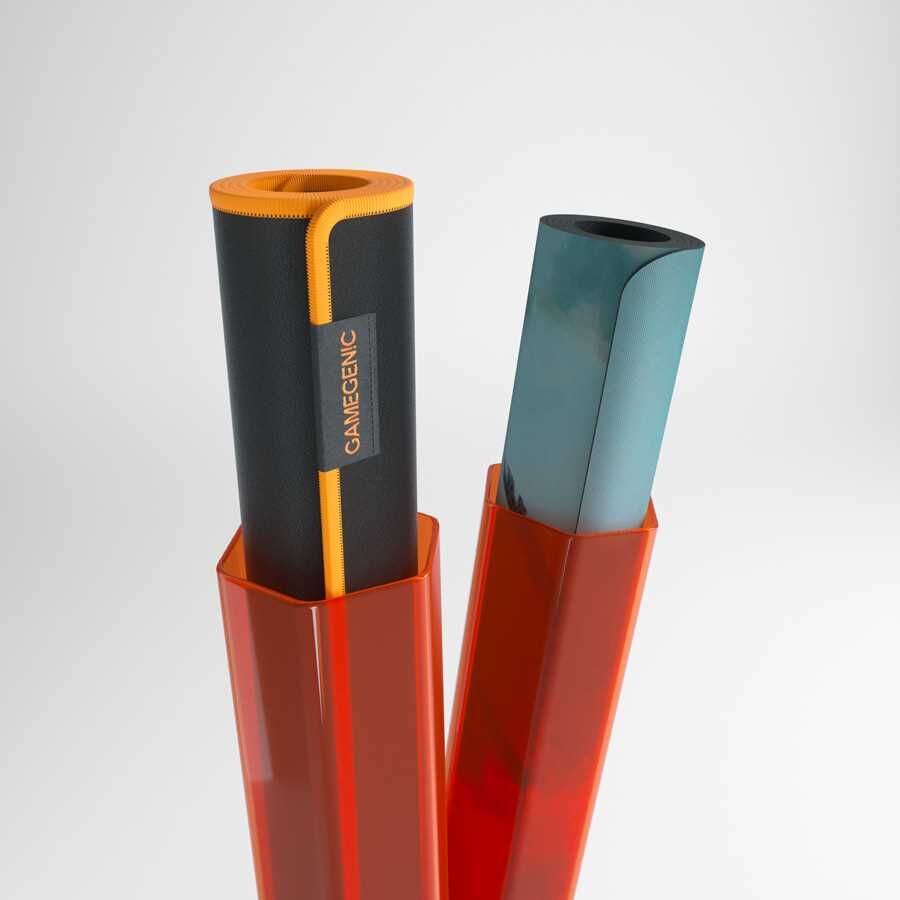
Gamegenic Playmat Tube - Red - Tabletop Gaming Accessories - Red Storage TubeKeep your playmat neatly stored and protected between games with this red Gamegenic Playmat Tube. It's designed for transporting and storing compatible playmats, helping to reduce creasing and protect the mat from everyday knocks and scratches. The tube has a hexagonal profile that prevents it from rolling across a table or other flat surface. Its robust construction is designed to withstand pressure during storage and transport, while the compact shape makes it practical to carry with your tabletop gaming accessories.6,69 £*Shipping: 3,95 £Secure redirect to the provider
-
Inspire Picks Cute Silicone Cat Ear Accessories For Gaming Headsets whiteAdd playful style to your favorite headphones with these adorable Cat ear headset accessories designed for gamers, streamers, and music lovers. Made from lightweight silicone material, these decorative attachments easily clip onto compatible...34,93 $*Shipping: 0,00 $Secure redirect to the provider
-
Team17 Software Ltd. Hell Let Loose: Vietnam – PS5 (Disc)Immerse yourself in the chaos of the Vietnam War with Hell Let Loose: Vietnam for PlayStation 5. This tactical first-person shooter focuses on coordinated multiplayer combat, communication, and battlefield tactics across dense jungle environments and expansive combat maps. Key features include large-scale online multiplayer battles supporting up to 50 players per side, with the option to fight as the North Vietnamese Army or the US Armed Forces. Battle across jungle environments inspired by real-world locations, and choose from a wide range of battlefield roles, including infantry, reconnaissance, armour, helicopter, and mortar positions. Use vehicles, patrol boats, helicopters, and tactical equipment during combat, and engage in multiple game modes, including Warfare and Offensive. Online play requires a PlayStation Plus membership and internet access.37,87 £*Shipping: 3,95 £Secure redirect to the provider


-
What is the chelating ability of ligands?
The chelating ability of ligands refers to their ability to form coordination complexes by binding to a central metal ion through multiple donor atoms. Ligands with chelating ability can form more stable complexes compared to monodentate ligands because they can wrap around the metal ion, forming a ring-like structure known as a chelate. This chelate structure enhances the stability of the complex by reducing the chances of other molecules displacing the ligand from the metal ion. Chelating ligands are commonly used in various fields such as medicine, environmental science, and industrial chemistry due to their ability to form stable and selective complexes with metal ions. **
-
What is the structural formula of ligands?
The structural formula of ligands can vary depending on the specific ligand, but in general, ligands are molecules or ions that have one or more lone pairs of electrons that can be donated to a metal ion. The structural formula typically includes the arrangement of atoms and lone pairs of electrons that are available for coordination to the metal ion. Ligands can be classified as monodentate, bidentate, tridentate, etc., depending on the number of donor atoms they have available for coordination. Overall, the structural formula of ligands reflects their ability to form coordination complexes with metal ions. **
-
How can one determine the toughness of ligands?
The toughness of ligands can be determined by their ability to form stable complexes with metal ions. Ligands with multiple donor atoms and strong donor atoms, such as nitrogen, oxygen, and sulfur, are generally tougher than ligands with fewer or weaker donor atoms. Additionally, the size and charge of the ligand can also affect its toughness, with larger and negatively charged ligands typically being tougher. Experimentally, the toughness of ligands can be determined by measuring the stability constants of the metal-ligand complexes they form. **
-
What is the number of ligands in coordination chemistry?
The number of ligands in coordination chemistry refers to the number of donor atoms in a molecule or ion that can bond to a central metal atom. The number of ligands can vary depending on the coordination number of the central metal atom. Common coordination numbers include 2, 4, 6, and 8, which correspond to complexes with 2, 4, 6, or 8 ligands, respectively. The coordination number and the number of ligands determine the geometry and overall structure of the coordination complex. **


What is the number of ligands in complex chemistry?
The number of ligands in complex chemistry refers to the number of molecules or ions that are bonded to a central metal atom. The number of ligands can vary depending on the coordination number of the metal atom, which is the total number of bonds formed with the ligands. Common coordination numbers include 2, 4, 6, and so on, which correspond to the number of ligands bonded to the central metal atom. The coordination number and the number of ligands play a crucial role in determining the geometry and properties of coordination complexes. **
Which factors influence the exchange rate of ligands in the complex?
The exchange rate of ligands in a complex is influenced by several factors. One key factor is the strength of the bond between the ligand and the central metal ion. Stronger bonds typically result in slower exchange rates. Additionally, the steric hindrance around the metal center can affect the exchange rate, with bulky ligands hindering the exchange process. The nature of the solvent and the temperature of the system can also impact the exchange rate of ligands in a complex. **
Top-Angebote
Products related to Ligands:
-
Inspired Deals Saab GM Tech 32MB Software Card For GM Tech2 Diagnostic Tool, Saab Diagnostic Card For Holden 1999 2012Unlock effortless, professionallevel diagnostics for your Saab with this GM Tech2 32MB card, crafted for precision and reliability. Designed specifically for Saab models from 19992012, this Saab diagnostic card comes with the latest released...64,97 $*Shipping: 0,00 $Secure redirect to the provider
-
Gamegenic Playmat Tube - Clear - Tabletop Gaming Accessories - Clear - TubeProtect and store your playmat with the Gamegenic Playmat Tube. Clear design prevents scratches and pressure. Hexagonal profile stops rolling. Easy to identify contents without opening.6,59 £*Shipping: 3,95 £Secure redirect to the provider
-
Gamegenic Playmat Tube - Red - Tabletop Gaming Accessories - Red Storage TubeKeep your playmat neatly stored and protected between games with this red Gamegenic Playmat Tube. It's designed for transporting and storing compatible playmats, helping to reduce creasing and protect the mat from everyday knocks and scratches. The tube has a hexagonal profile that prevents it from rolling across a table or other flat surface. Its robust construction is designed to withstand pressure during storage and transport, while the compact shape makes it practical to carry with your tabletop gaming accessories.6,69 £*Shipping: 3,95 £Secure redirect to the provider
-
When are ligands neutrally charged?
Ligands are neutrally charged when they have an equal number of positive and negative charges. This can occur when the ligand has a net charge of zero, such as in the case of water (H2O) or ammonia (NH3). Additionally, ligands can also be neutrally charged when they form coordinate covalent bonds with a metal ion, resulting in a neutral overall charge for the complex. **
-
What is the toughness of ligands?
The toughness of ligands refers to their ability to form stable coordination complexes with metal ions. Ligands with high toughness have strong bonds with the metal ion, making them less likely to dissociate from the complex. This property is important in determining the stability and reactivity of coordination complexes. Tough ligands are often used in catalysis and other applications where the complex needs to remain intact under harsh conditions. **
-
What is the chelating ability of ligands?
The chelating ability of ligands refers to their ability to form coordination complexes by binding to a central metal ion through multiple donor atoms. Ligands with chelating ability can form more stable complexes compared to monodentate ligands because they can wrap around the metal ion, forming a ring-like structure known as a chelate. This chelate structure enhances the stability of the complex by reducing the chances of other molecules displacing the ligand from the metal ion. Chelating ligands are commonly used in various fields such as medicine, environmental science, and industrial chemistry due to their ability to form stable and selective complexes with metal ions. **
-
What is the structural formula of ligands?
The structural formula of ligands can vary depending on the specific ligand, but in general, ligands are molecules or ions that have one or more lone pairs of electrons that can be donated to a metal ion. The structural formula typically includes the arrangement of atoms and lone pairs of electrons that are available for coordination to the metal ion. Ligands can be classified as monodentate, bidentate, tridentate, etc., depending on the number of donor atoms they have available for coordination. Overall, the structural formula of ligands reflects their ability to form coordination complexes with metal ions. **
Similar search terms for Ligands
-
Inspire Picks Cute Silicone Cat Ear Accessories For Gaming Headsets whiteAdd playful style to your favorite headphones with these adorable Cat ear headset accessories designed for gamers, streamers, and music lovers. Made from lightweight silicone material, these decorative attachments easily clip onto compatible...34,93 $*Shipping: 0,00 $Secure redirect to the provider
-
Team17 Software Ltd. Hell Let Loose: Vietnam – PS5 (Disc)Immerse yourself in the chaos of the Vietnam War with Hell Let Loose: Vietnam for PlayStation 5. This tactical first-person shooter focuses on coordinated multiplayer combat, communication, and battlefield tactics across dense jungle environments and expansive combat maps. Key features include large-scale online multiplayer battles supporting up to 50 players per side, with the option to fight as the North Vietnamese Army or the US Armed Forces. Battle across jungle environments inspired by real-world locations, and choose from a wide range of battlefield roles, including infantry, reconnaissance, armour, helicopter, and mortar positions. Use vehicles, patrol boats, helicopters, and tactical equipment during combat, and engage in multiple game modes, including Warfare and Offensive. Online play requires a PlayStation Plus membership and internet access.37,87 £*Shipping: 3,95 £Secure redirect to the provider
-
Nonin Medical nVision Data Management Software for Oximetry Screening""" nVision SpO2 Data Management Software Nonin's innovation in pulse oximetry has led to the development of an easy oximetry reporting solution nVISION. Designed to provide effortless viewing, professional analysis, report generation and reliable..."441,00 $*Shipping: 0,00 $Secure redirect to the provider
-
How can one determine the toughness of ligands?
The toughness of ligands can be determined by their ability to form stable complexes with metal ions. Ligands with multiple donor atoms and strong donor atoms, such as nitrogen, oxygen, and sulfur, are generally tougher than ligands with fewer or weaker donor atoms. Additionally, the size and charge of the ligand can also affect its toughness, with larger and negatively charged ligands typically being tougher. Experimentally, the toughness of ligands can be determined by measuring the stability constants of the metal-ligand complexes they form. **
-
What is the number of ligands in coordination chemistry?
The number of ligands in coordination chemistry refers to the number of donor atoms in a molecule or ion that can bond to a central metal atom. The number of ligands can vary depending on the coordination number of the central metal atom. Common coordination numbers include 2, 4, 6, and 8, which correspond to complexes with 2, 4, 6, or 8 ligands, respectively. The coordination number and the number of ligands determine the geometry and overall structure of the coordination complex. **
-
What is the number of ligands in complex chemistry?
The number of ligands in complex chemistry refers to the number of molecules or ions that are bonded to a central metal atom. The number of ligands can vary depending on the coordination number of the metal atom, which is the total number of bonds formed with the ligands. Common coordination numbers include 2, 4, 6, and so on, which correspond to the number of ligands bonded to the central metal atom. The coordination number and the number of ligands play a crucial role in determining the geometry and properties of coordination complexes. **
-
Which factors influence the exchange rate of ligands in the complex?
The exchange rate of ligands in a complex is influenced by several factors. One key factor is the strength of the bond between the ligand and the central metal ion. Stronger bonds typically result in slower exchange rates. Additionally, the steric hindrance around the metal center can affect the exchange rate, with bulky ligands hindering the exchange process. The nature of the solvent and the temperature of the system can also impact the exchange rate of ligands in a complex. **
* All prices are inclusive of VAT and, if applicable, plus shipping costs. The offer information is based on the details provided by the respective shop and is updated through automated processes. Real-time updates do not occur, so deviations can occur in individual cases. ** Note: Parts of this content were created by AI.